
Transport
A fleet that no longer depends on a file and one person
The fleet was run from a file of expiry dates someone intended to check every week. It worked until the week that person was on holiday.
A transport and distribution company with a few dozen vehicles
Where we started
The part missing from most case studies, and the only one that tells you whether it resembles your own situation.
Vehicle records lived in a file with columns for technical inspections, insurance, road tax, licences and certificates. Someone looked over it, in theory weekly, in practice when they remembered. An expired inspection found during a roadside check costs more than almost any repair, and the risk grew in step with the number of vehicles.
In parallel, fuel use was tracked from refuelling receipts, compared roughly against the mileage drivers reported. Nobody could say what a kilometre actually cost on a given vehicle, because the data sat in three places that never met: the fleet file, the receipts and the GPS system.
What was breaking, concretely
- Expiry dates depended on the memory and the presence of a single person.
- The mileage reported by the driver and the one from GPS were never compared.
- Servicing happened at "roughly" the right mileage, from notes.
- Cost per kilometre was a year-end estimate rather than a working indicator.
Goals
What the application had to solve
The alert on a deadline should go out by itself, to a named person, rather than depend on someone checking.
Mileage should come from the GPS system, not from manual reporting.
Refuelling should be compared automatically against the vehicle's consumption norm.
Cost per kilometre should be calculable per vehicle and per period, at any time.
What we built
The application, module by module
Not a feature list, but what each piece does and why it was needed.
-
01
Documents and deadlines
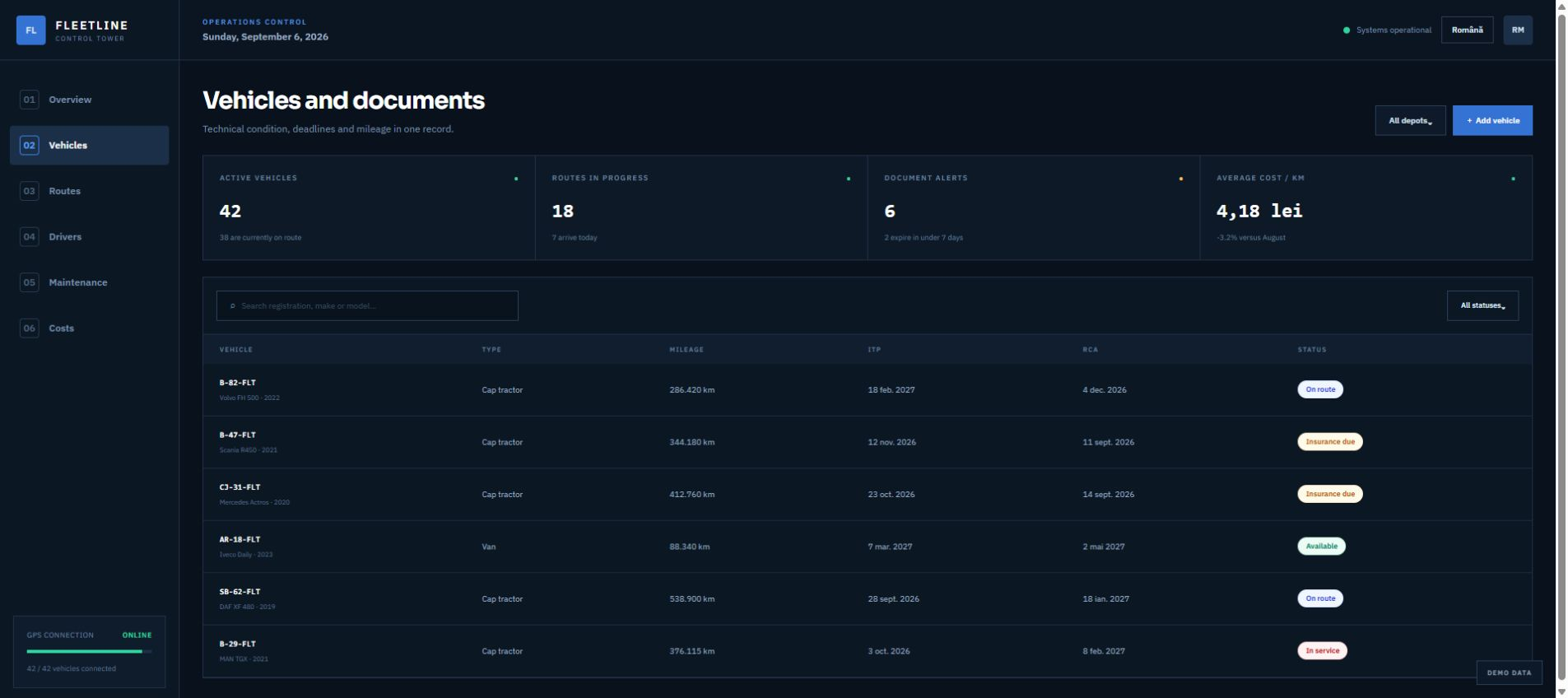
Every vehicle has its documents with an expiry date. The application sends the alert with a configurable lead time, to the person responsible, and repeats it until the document is renewed. It does not wait for anyone to open a screen.
What it covers
- Inspections, insurance, road tax, licences, certificates, cargo cover
- An alert with a configurable lead time, repeated until resolved
- A panel with everything expiring in the next thirty days
-
02
Trips and GPS integration
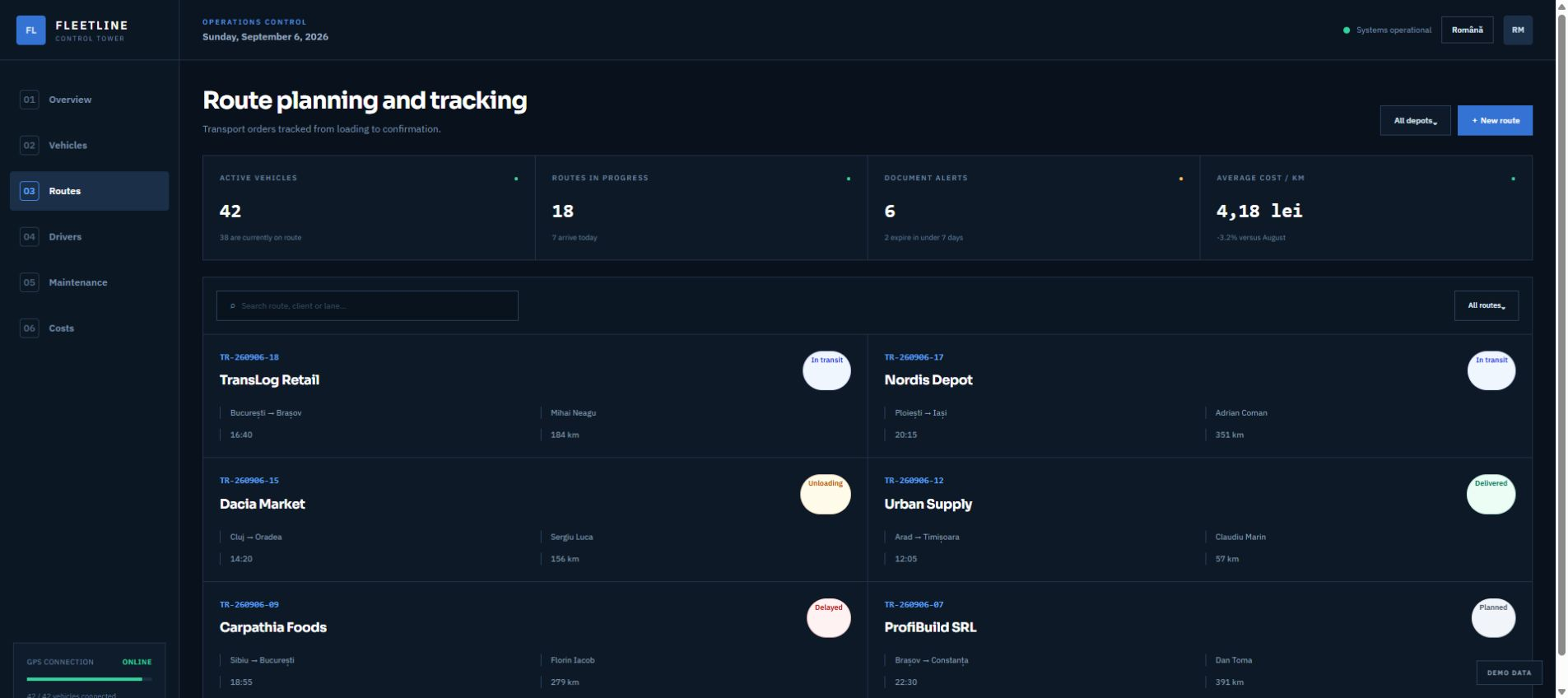
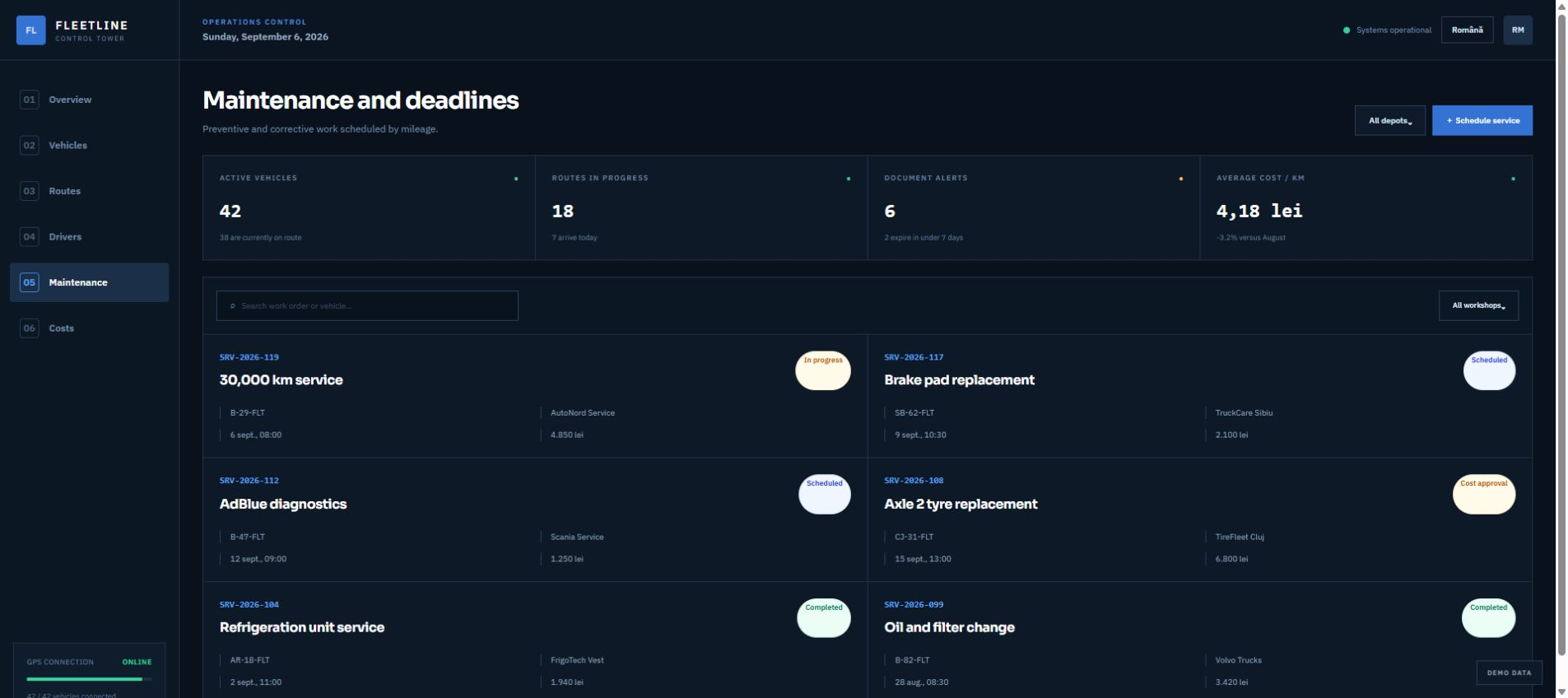
Trips are recorded as outbound and return runs, with distances and times. Mileage comes from the GPS system the company already used, through an integration — we did not replace that system, we used it as a source. Servicing is scheduled on real mileage and announces itself.
What it covers
- Trips with distances and times pulled in automatically
- Servicing at real mileage, announced before it falls due
- The history of work done on each vehicle
-
03
Fuel use and cost per kilometre
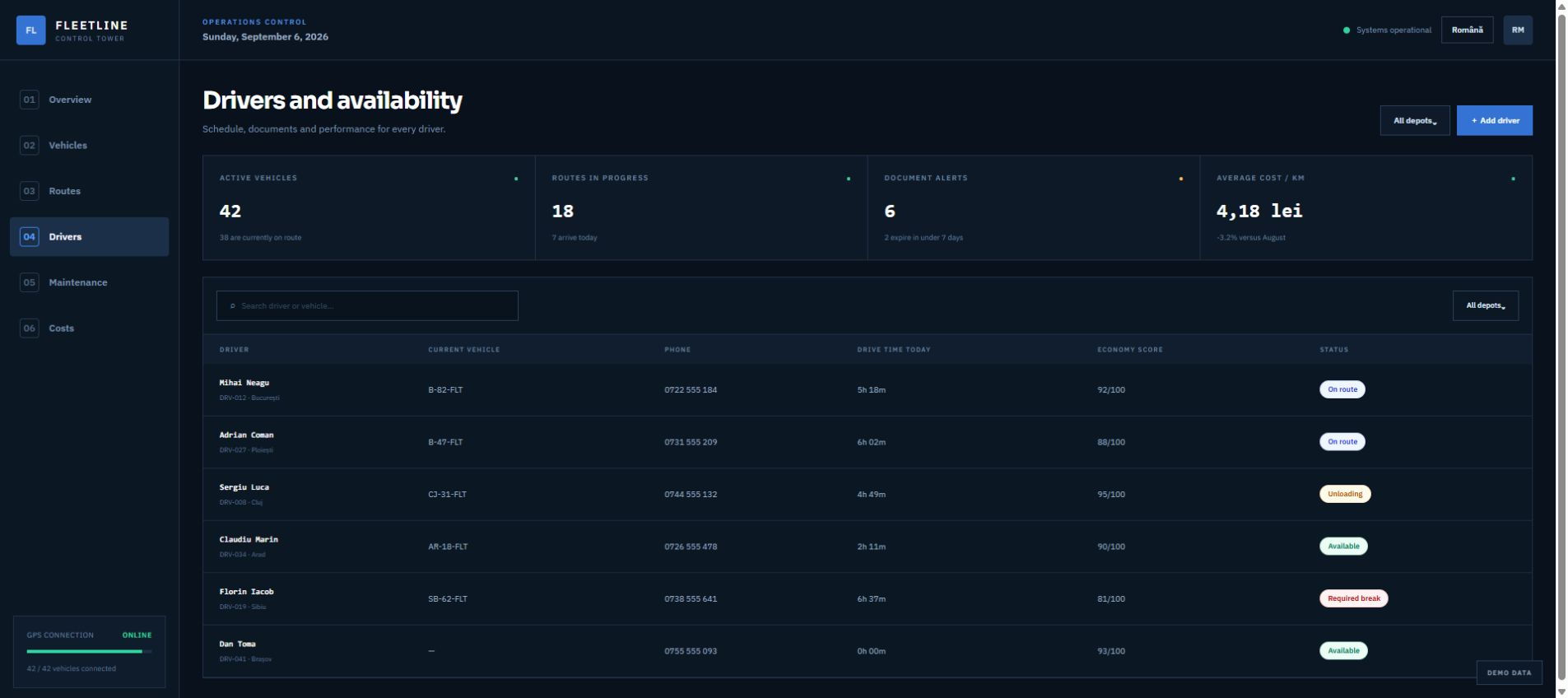
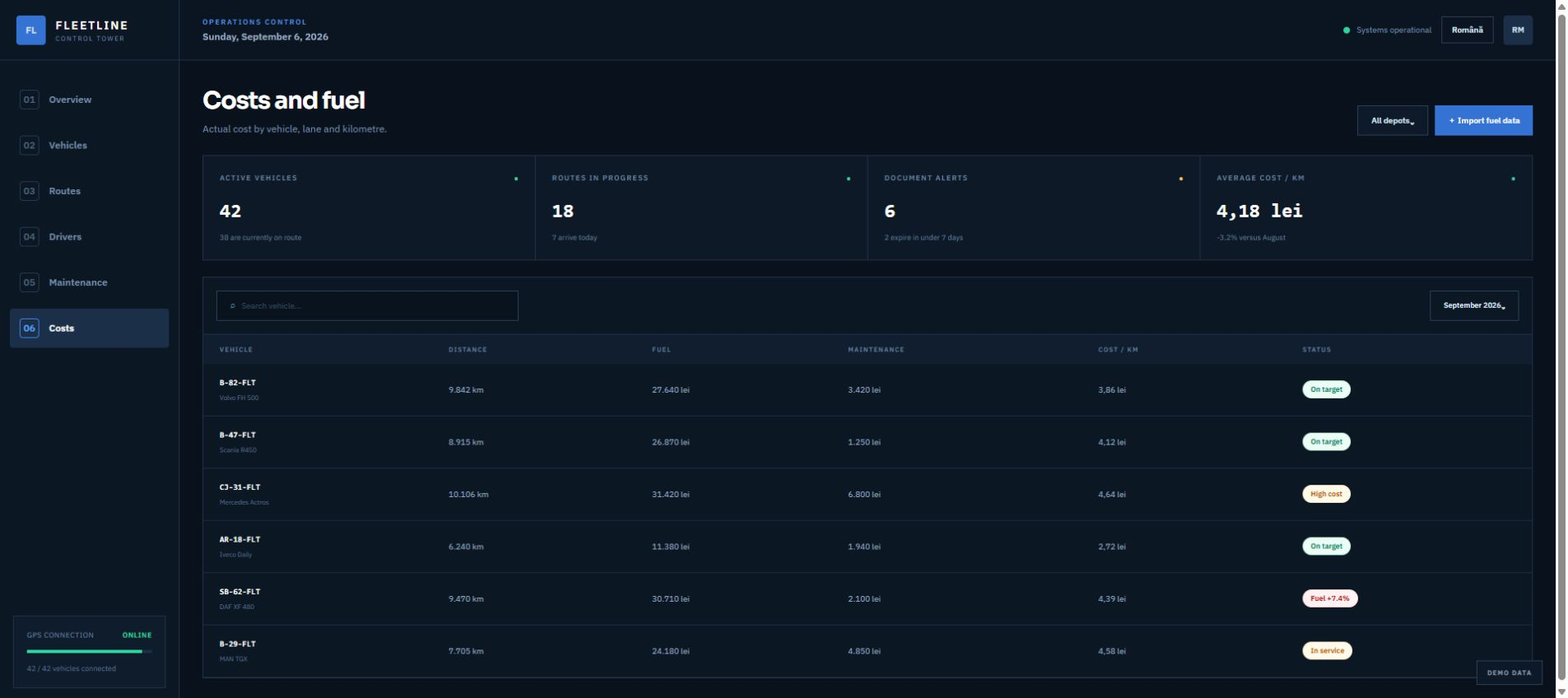
The driver reports refuelling from a phone, with a photo of the receipt. The application compares the resulting consumption against the vehicle's norm and flags deviations. From refuelling, servicing, documents and depreciation comes the total cost per kilometre, per vehicle and per period.
What it covers
- Refuelling reported from a phone, with the document attached
- An automatic comparison against the vehicle's consumption norm
- Total cost per kilometre, per vehicle and per period
Decisions
What we chose and why
The choices that changed the project: where we took the simpler option, where we insisted on the more expensive one, and what would have happened otherwise.
We did not replace the GPS system, we connected to it
The company already had a working, paid-for GPS system. The original request included tracking inside the new application. We proposed integration instead of replacement: the same data, without a second subscription and without the risk of building worse something that already worked. It shortened the project by several weeks and took the highest-risk part out of scope.
The alert goes to a person, it does not wait in the application
A panel of upcoming deadlines exists, but it is not the main mechanism. The original problem was precisely that the panel — the file — had to be opened by someone. An alert that goes out by itself, repeats, and stops only when resolved is the only form that survives holidays, busy days and a change of the person responsible.
We delivered in two stages, documents first
The cost side was the most interesting for management, but the riskiest was expired documents. We delivered the documents and alerts module first, in a few weeks, and only then trips and costs. The largest risk was removed before the project was half done.
How the work looks now
No percentages and no hours saved — only what you can see by opening the application.
Deadlines no longer depend on a weekly check, and mileage comes from a source nobody fills in by hand. Cost per kilometre can be opened at any time rather than estimated at year end.
- The alert on an expiring document goes out by itself and repeats until resolved.
- Mileage comes from the GPS system, not from driver reporting.
- Consumption above the norm is flagged at refuelling, not discovered in the monthly analysis.
- Cost per kilometre is calculated per vehicle and per period, from existing data.
What we learned
Including what we got wrong
The order of delivery matters more than its content. The less spectacular module, delivered first, removed the risk that cost the company most.
A system that works and is already paid for does not need replacing merely because someone else built it. The best part of this project is an integration, not a build.
Interactive demo
Open the application, not only its story
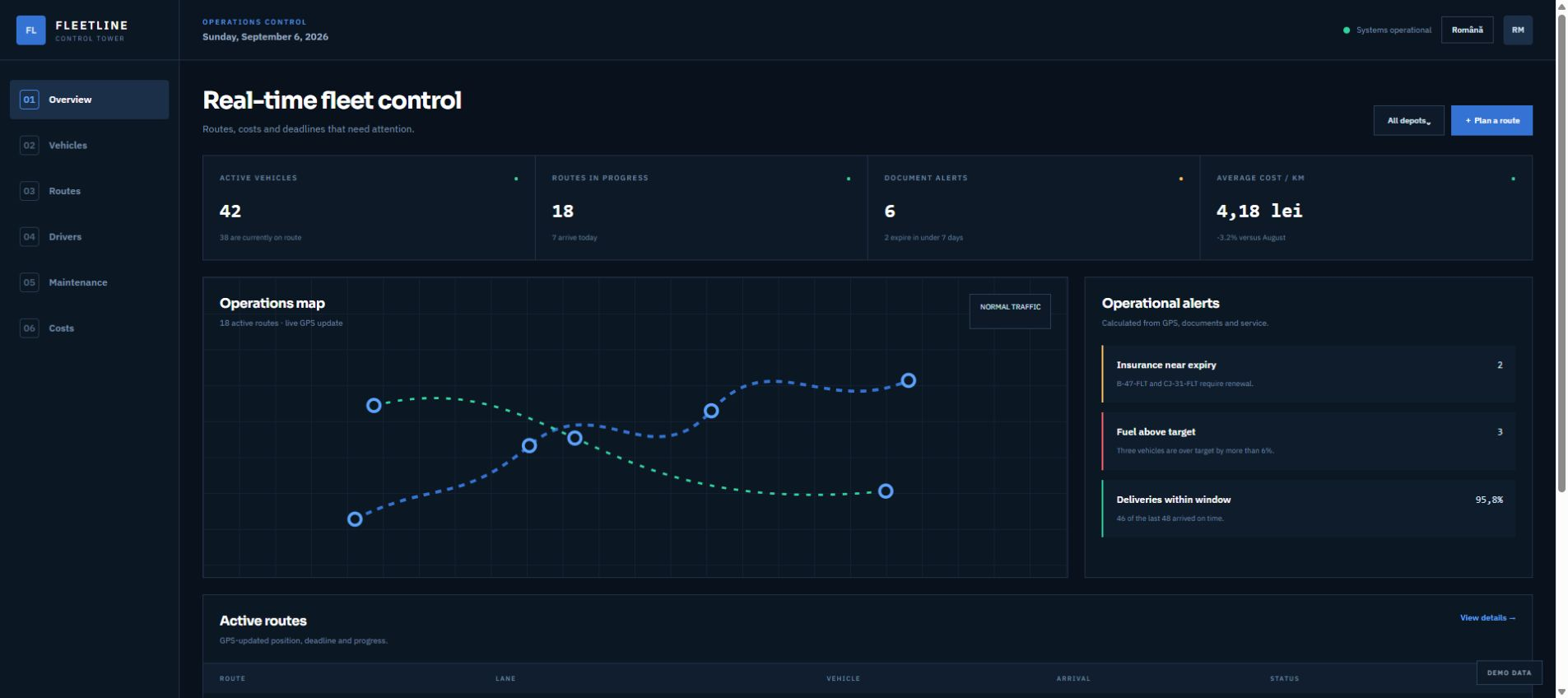
Six working screens, with navigation and search, available in English and Romanian. The names, companies and figures are demonstrative.
Frequently asked questions
What people ask us about this project
If your question is not here, write to us — we answer just as directly.
Ask us a questionDoes it connect to the GPS system we already use?
Usually yes, if the provider exposes an integration interface — most do. We check the specifics during analysis. Our recommendation is integration rather than replacement: you already pay for good data, there is no sense in building the same tracking a second time.
From how many vehicles is an application worth it?
Under ten vehicles, a disciplined file can be enough, and we will say so. Above that, the risk grows faster than the attention available: the problem is not the number of vehicles, it is the number of deadlines one person has to remember.
Do drivers have to learn something complicated?
The driver has one screen: refuelling, amount, mileage, photo of the receipt. The rest of the application is none of their concern. If the driver's screen cannot be filled in under a minute, it will not be filled in at all — that was the design rule.
What we used from what we do
The project above happened once. These pages say what we deliver in general, who it suits and how long it takes.
Other projects
See all case studies →Leave taken out of the spreadsheet and out of the inbox
The record of leave lived in a file kept by one person, and approvals travelled by email. It worked, until two managers approved the same day in parallel.
Read →A payment notice the owner understands unaided
The manager spent more time explaining the calculation than doing it. The application did not shorten the calculation — it removed the need for the explanation.
Read →The receipt photographed on the spot, the claim closed without the pile
Receipts collected in a wallet and reached accounting once a month, creased and without context. Half the time spent on claims went into reconstructing who spent what, where and why.
Read →Do you recognise anything in the situation above?
Tell us how you work today and where it gets stuck. The first conversation is about you, not about what we did for someone else.