
Property management
A payment notice the owner understands unaided
The manager spent more time explaining the calculation than doing it. The application did not shorten the calculation — it removed the need for the explanation.
A management company with several associations in its portfolio
Where we started
The part missing from most case studies, and the only one that tells you whether it resembles your own situation.
The monthly calculation was done in a spreadsheet built up over years, with formulas one person understood. The payment notice came out as a list with a total and a few lines. Every owner who did not understand where the figure came from called or came to the office, and the same conversation restarted the following month.
The real problem was not the time spent calculating. It was that the only proof the calculation was correct was the manager's word, and in an association with forty-eight units that is not enough.
What was breaking, concretely
- Allocation worked differently for each type of cost, and the rule appeared nowhere on the notice.
- Meter readings were collected on paper and entered by hand, with the errors that implies.
- Arrears and penalties were calculated separately, in another file.
- A corrupted or lost file would have meant reconstructing years of records.
Goals
What the application had to solve
Every figure on the notice should show the rule it was allocated by.
The owner should see their own notice and history without calling anyone.
Arrears and penalties should follow from recorded payments, not from a parallel calculation.
The historical data should go into the application, so there is no second source of truth.
What we built
The application, module by module
Not a feature list, but what each piece does and why it was needed.
-
01
Allocation, with the rule in plain sight
Every cost gets an allocation method: by occupants, by ownership share, by floor area or by metered consumption. The method appears on the notice, next to the figure. The owner does not receive a number, they receive a calculation.
What it covers
- Four allocation methods, chosen per cost
- Individual metering, with the difference against the main meter allocated
- Special cases: unoccupied units, commercial spaces, separate risers
-
02
Notices and payments
The notice is generated for the whole association in a single action and can be printed or sent. Payments go into the application, and arrears and penalties follow from them — there is no longer a second set of records to contradict the first.
What it covers
- A notice with a full breakdown by cost and by method
- Penalties calculated by the rule in the association's own statutes
- The position per unit, per stairwell and per association
-
03
Separate access per role
The owner logs in and sees their notice, payment history and their own consumption. The committee sees the whole association's position but cannot change anything. The manager holds the operating rights. Three roles, three different applications on the same system.
What it covers
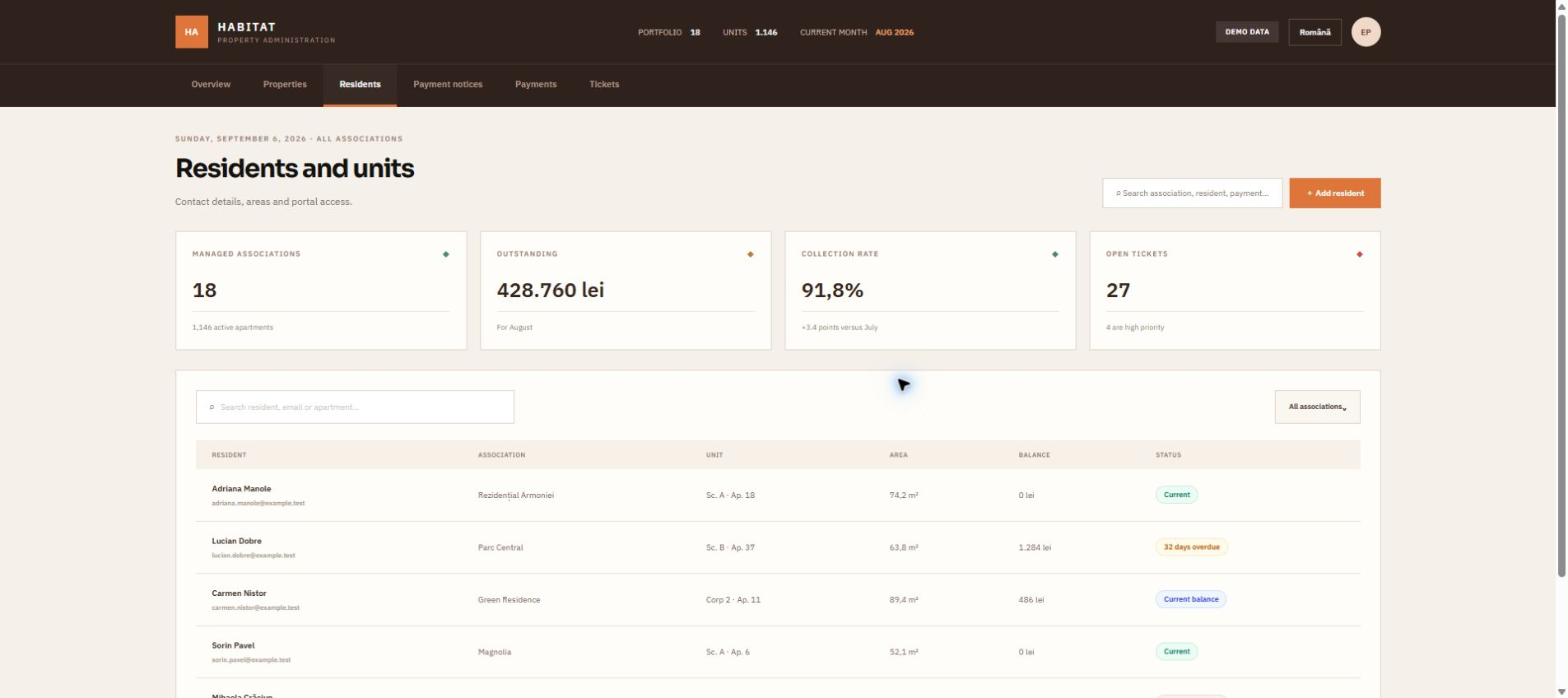
- Owner: their own notice, history, issue reports
- Committee: the association's position, with no right to change it
- Manager: operations, issuing, payments, reports
Decisions
What we chose and why
The choices that changed the project: where we took the simpler option, where we insisted on the more expensive one, and what would have happened otherwise.
We migrated three years of history, although it was out of scope
The initial plan was to start from the current month. During analysis it became clear that without the history, arrears cannot be calculated, and the application would have stayed a half-tool with the manager still opening the old file anyway. We extended the stage with the import and its verification. It cost two extra weeks and it was the one decision without which the project would not have worked.
An owner portal before a phone app
A phone app for owners was requested. We proposed a portal that runs in the phone's browser first, because the barrier was not the screen, it was installation: a seventy-year-old owner does not download an app to look at a notice, but they will open a link. The app stayed on the list for later, which is where it still is.
Meter readings stay manual, but with a check
We discussed reading them automatically from photographs. We dropped it: the error rate on old meters was too high, and a wrong reading in an allocation calculation produces a wrong bill for everyone. Instead, the application compares the entered reading against consumption history and asks for confirmation when the difference is implausible.
How the work looks now
No percentages and no hours saved — only what you can see by opening the application.
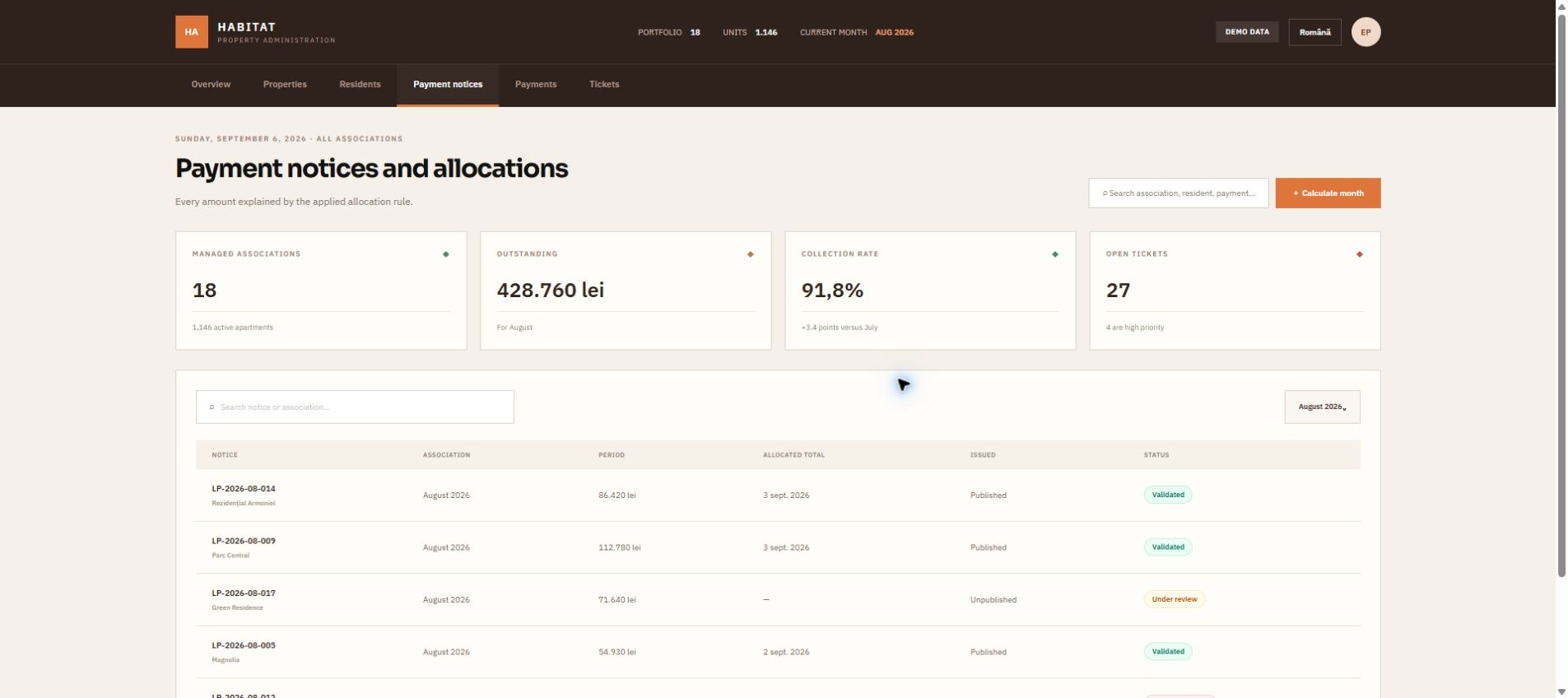
The notice shows where every figure comes from, and the owner can open it themselves. The monthly conversation about the calculation has not disappeared entirely, but it has become an exception rather than a routine.
- Every line on the notice shows the allocation method used.
- Arrears and penalties follow from recorded payments, not from a second file.
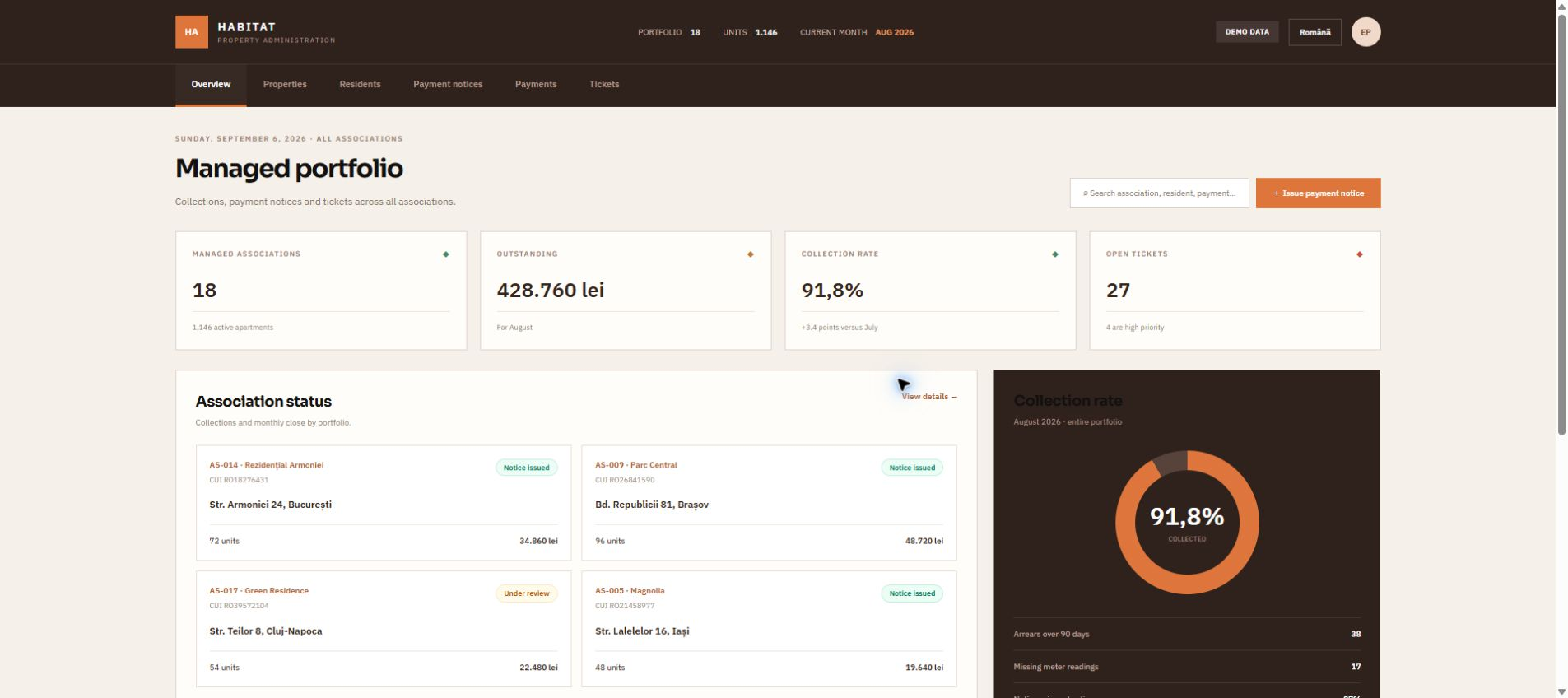
- The committee sees the association's position at any time, without asking the manager.
- An implausible meter reading is flagged on entry, not discovered after issuing.
What we learned
Including what we got wrong
In a field where people dispute figures, transparency of the calculation is worth more than its speed. We could have made the application twice as fast and it would have changed nothing.
Migrating historical data looks like a formality in the initial quote and is, almost always, the stage that decides whether the application gets used or sits next to the old file.
Interactive demo
Open the application, not only its story
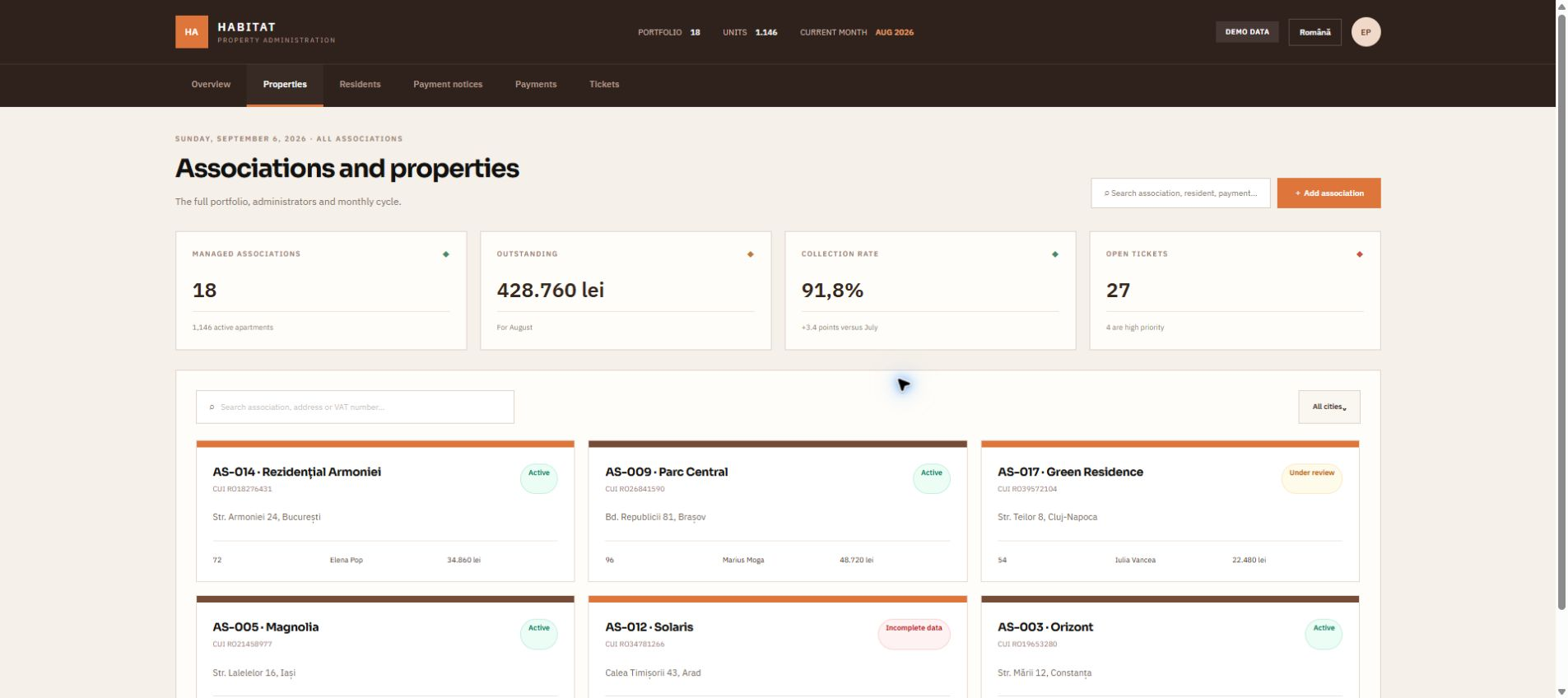
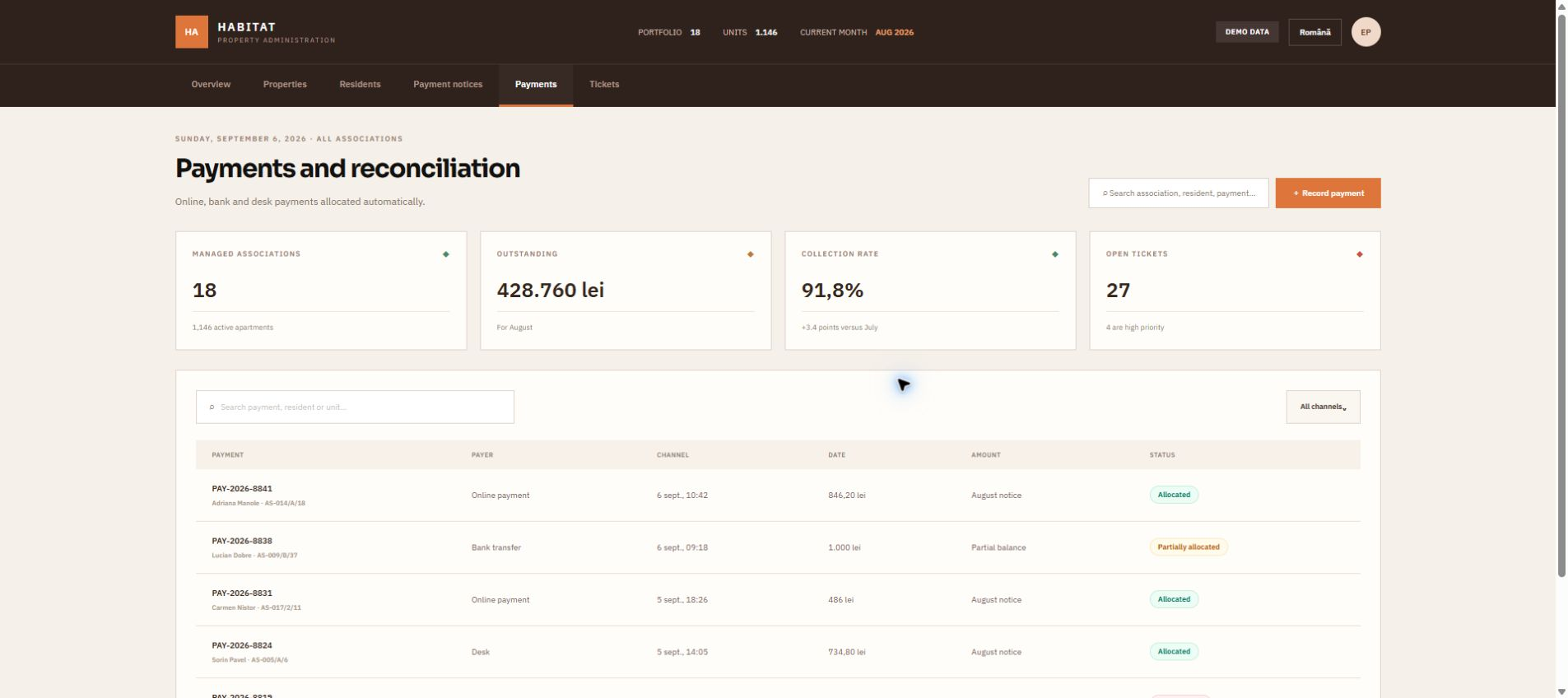
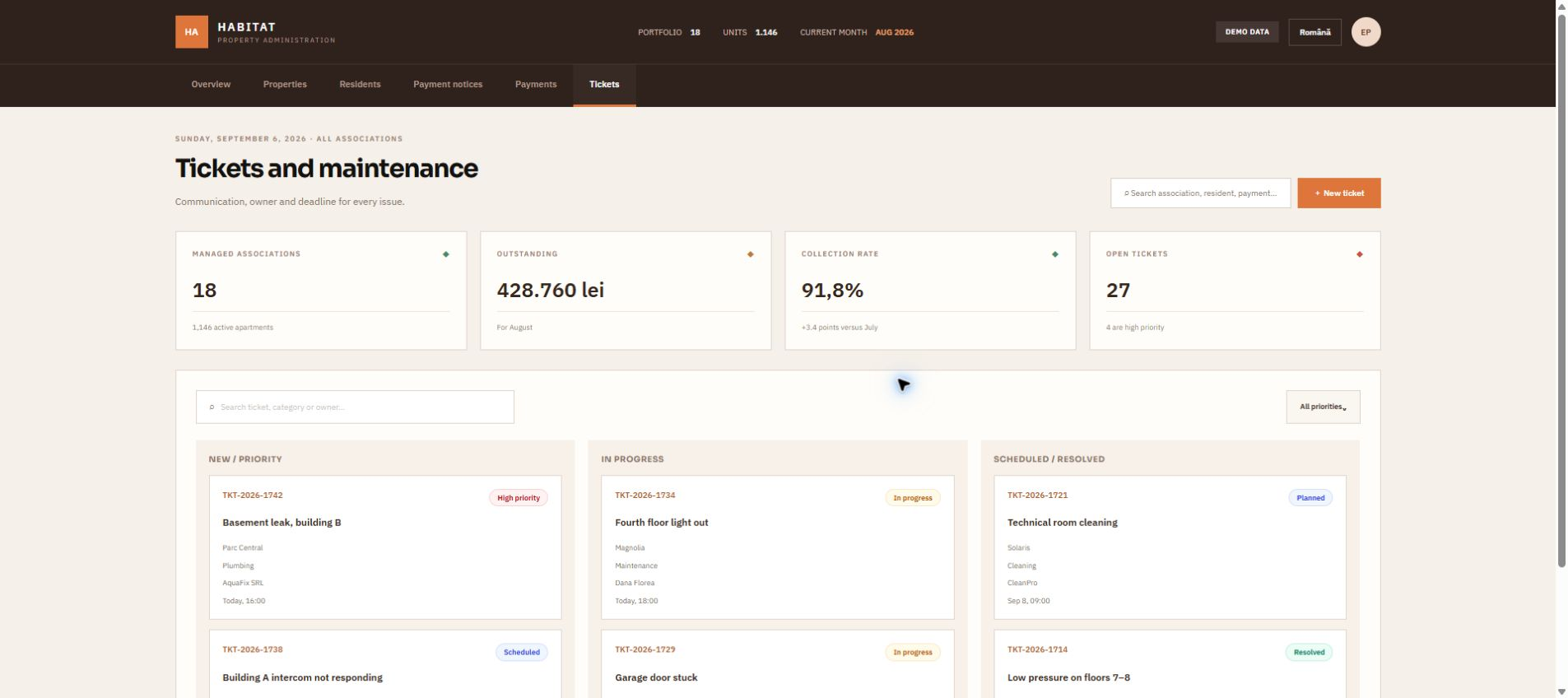
Six working screens, with navigation and search, available in English and Romanian. The names, companies and figures are demonstrative.
Frequently asked questions
What people ask us about this project
If your question is not here, write to us — we answer just as directly.
Ask us a questionDoes it work for several associations at once?
Yes. The application is built for a management company with a portfolio, not for a single association: each has its own costs, rules and committee, and the manager sees all of them from the same place.
How do we move over from the current files?
By import, with verification. We take the existing records, load them and compare the results across several months that have already been calculated. The application does not go into use until it produces the same figures as the old file on data you know.
Do owners have to install anything?
No. The portal opens from a link, in a phone or desktop browser. It was a deliberate decision: installing an app is the barrier that stops exactly the owners who would need it most.
What we used from what we do
The project above happened once. These pages say what we deliver in general, who it suits and how long it takes.
Web applications
Web applications for processes an ordinary website, a CMS or an off-the-shelf product cannot cover.
Details → 4-10 weeks SolutionProperty management
Costs allocated correctly, payment notices generated automatically, and owners who can see their own position.
Details → 6-12 weeksOther projects
See all case studies →Leave taken out of the spreadsheet and out of the inbox
The record of leave lived in a file kept by one person, and approvals travelled by email. It worked, until two managers approved the same day in parallel.
Read →The receipt photographed on the spot, the claim closed without the pile
Receipts collected in a wallet and reached accounting once a month, creased and without context. Half the time spent on claims went into reconstructing who spent what, where and why.
Read →A CRM salespeople actually log into
The company already had a subscription CRM. The problem was not a missing tool, it was that nobody filled it in — because it gave nothing back to the person entering the data.
Read →Do you recognise anything in the situation above?
Tell us how you work today and where it gets stuck. The first conversation is about you, not about what we did for someone else.